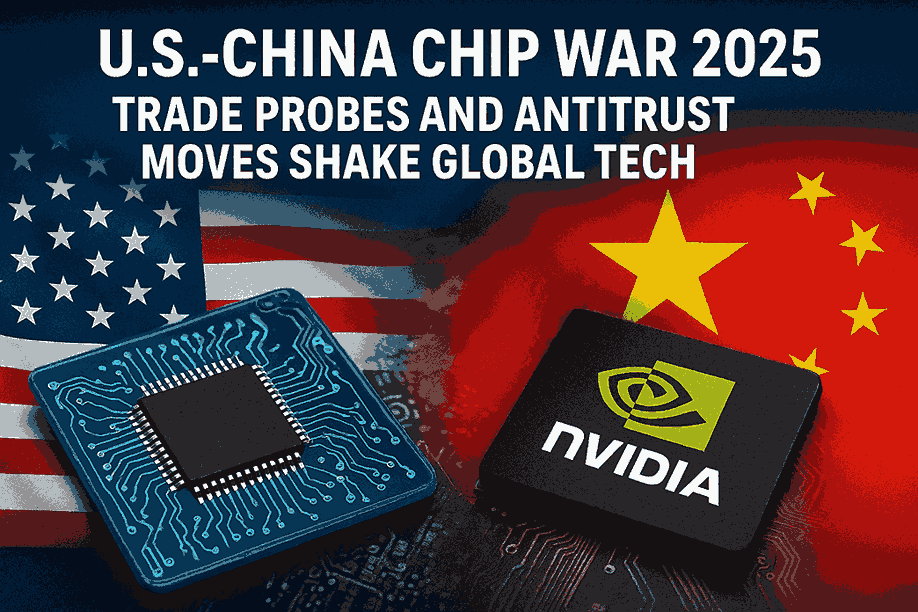
China Semiconductor Probes Shake Global Tech – United States-China
In September 2025, China Ministry of Commerce launched two major investigations into the United States semiconductor sector. One targets American analog integrated circuits (ICs), essential for automotive systems, consumer electronics and industrial applications. The other probe examines U.S. export controls and investment regulations, which Beijing claims unfairly limit Chinese chipmakers’ growth. Observers see these actions as China pushing back against what it perceives as United States efforts to contain its technological progress. The timing just before high-level trade talks in Madrid adds extra tension to an already strained relationship. signaling that semiconductors remain a key battleground in United States-China economic and technological rivalry.
Supply Chains Feeling the Pressure – United States-China
Semiconductors are the backbone of modern electronics and disruptions in trade between the United States and China can have global consequences. Potential tariffs or restrictions on U.S. firms like Texas Instruments and Analog Devices could raise manufacturing costs and disrupt supply chains worldwide.
China remains a crucial market for American companies. so any trade barriers may hurt revenue and market share. At the same time, China is aggressively pursuing semiconductor self-reliance, investing in domestic manufacturing and innovation to reduce dependence on foreign technology. Meanwhile, U.S. export controls continue to target Chinese tech giants like SMIC, aiming to slow their progress in AI and advanced chip production.
Nvidia Faces Regulatory Heat – United States-China
Amid rising tensions, China is investigating Nvidia for alleged antitrust violations related to its 2020 acquisition of Mellanox Technologies. Analysts say the probe reflects growing competition in AI chip development. affecting both investor confidence and market sentiment. For Nvidia and other United States tech firms operating in China. the situation underscores the difficulty of navigating a complex regulatory environment while remaining competitive in global markets.
Broader Geopolitical and Economic Impacts – United States-China
The semiconductor dispute is part of a larger United States-China tech rivalry with worldwide implications. The U.S. cites national security concerns for its measures. while China frames them as protectionist. Rising tensions threaten international trade agreements, complicate electronics supply chains and could slow innovation in AI automotive and consumer electronics sectors. Global markets have reacted with volatility as investors weigh the impact of tariffs trade probes and regulatory scrutiny. Companies worldwide are reconsidering supply chain strategies exploring options like localized manufacturing or diversification to mitigate risk.
What Lies Ahead – United States-China
Trade negotiations, including those in Madrid, aim to ease tensions, but major breakthroughs remain uncertain. While both nations have temporarily paused tariffs in the past, core issues persist. Many industry experts predict that semiconductors will remain a central point of United States-China friction, driving continued efforts for domestic manufacturing, supply chain diversification and strategic leverage. The 2025 semiconductor disputes highlight how critical these technologies are to modern economies and global geopolitics. For policymakers, investors and companies, understanding and responding to these developments is crucial to navigating a rapidly evolving tech landscape.
Team By Also Author – Flame Tadka / flametadka.com
France Says the Economy Is Safe – But Should Investors Believe It?